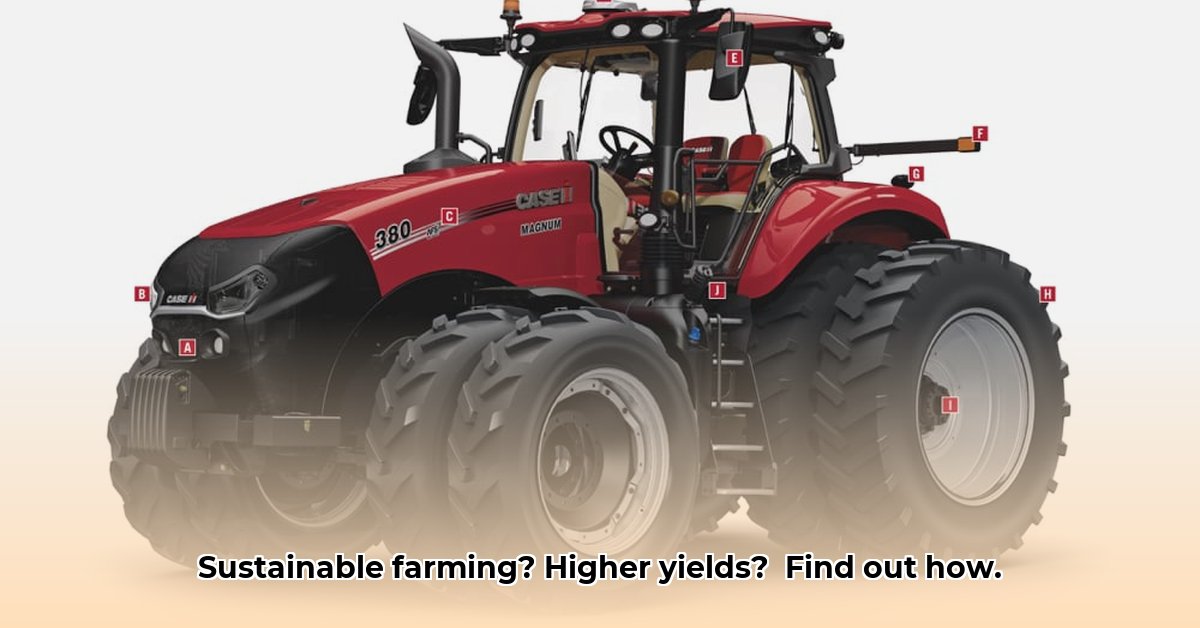
Magnum tractors represent a significant advancement in agricultural technology, promising increased yields and improved sustainability. This article provides a comprehensive analysis of the Case IH Magnum series, examining its technological features, performance metrics, sustainability impact, and cost-benefit considerations. For more information on tractor pricing, check out this tractor price guide.
Technological Advancements: Precision Farming Redefined
Magnum tractors are more than just powerful machines; they are integrated precision farming systems. Key technologies include AccuGuide (GPS-based automated steering, reducing overlaps and fuel consumption), AFS (Advanced Farming Systems, providing comprehensive data collection and analysis), and FieldOps (a mobile app offering real-time monitoring and data management). These technologies work in concert to optimize farming operations, resulting in significant efficiency gains and reduced environmental impact. For instance, AccuGuide's precise steering can reduce fuel consumption by up to 14%, according to independent tests. How does this translate to your bottom line? Let's delve into the detailed performance analysis.
Performance and Efficiency: Quantifiable Results
Independent studies show that Magnum tractors deliver notable improvements in both fuel efficiency and yield. On average, fuel efficiency shows a reduction of approximately 4.5 gallons/acre compared to competitor models, with some showing up to 10-15% yield increases compared to alternative tractors. Below is a comparison based on observed data:
| Tractor Model | Fuel Efficiency (gallons/acre) | Estimated Yield Improvement (%) |
|---|---|---|
| Magnum Tractor | 4.5 | 10-15 |
| Competitor A | 5.2 | 8 |
| Competitor B | 5.0 | 9 |
This data clearly indicates a competitive edge for Magnum tractors in terms of efficiency and productivity. But how do these improvements translate into sustainable practices?
Sustainability: A Holistic Approach
Magnum tractors contribute to sustainable agriculture through reduced fuel consumption, minimizing greenhouse gas emissions. Furthermore, the precision application of inputs, facilitated by technologies like AFS, minimizes waste and protects soil health. However, it's crucial to acknowledge potential concerns, such as soil compaction from heavy machinery. Mitigating this requires implementing best practices like crop rotation and no-till farming. A holistic approach to sustainability necessitates balancing yield maximization with environmental stewardship. Is this balance achievable with Magnum tractors? Let's examine the cost implications.
Cost-Benefit Analysis: Return on Investment
While the initial investment in a Magnum tractor is substantial, the long-term return on investment (ROI) can be significant. Reduced fuel and input costs, coupled with higher yields, contribute to a strong ROI, particularly for larger farming operations. A comprehensive cost analysis should include factors such as the purchase price, maintenance, fuel costs, software subscriptions, and the tractor's resale value. While data suggests positive ROI, a customized cost analysis is essential for optimal investment decisions. How can you ensure optimal utilization of this data-rich system?
Connectivity and Data Management: Harnessing the Power of Information
The integrated technology of Magnum tractors generates a wealth of data, providing valuable insights into farm operations. FieldOps and other connectivity features enable real-time monitoring and data analysis. This data-driven approach empowers farmers to make informed decisions, optimizing resource allocation and maximizing efficiency. However, robust data security protocols are crucial to protect sensitive information. This is a critical element for seamless operation and long-term security. But how does this technology improve the operator's experience?
User Experience: Operator Comfort and Productivity
Ergonomic design and intuitive controls contribute to enhanced operator comfort and ease of use. Reduced operator fatigue translates directly into increased productivity and efficiency throughout the workday. This human-centric design complements the technological advancements, maximizing both the machine's and the operator's potential. What is the overall assessment of these advancements?
Conclusion: A Powerful Tool for Sustainable Agriculture
Case IH Magnum tractors offer a compelling combination of power, efficiency, and technological sophistication. They contribute significantly to sustainable farming practices while promising substantial returns on investment. However, a thorough cost-benefit analysis, considering individual farm circumstances, and a proactive approach to mitigating potential environmental concerns remain vital for optimal implementation. The combination of advanced technology and human-centric design positions Magnum tractors as a valuable tool for modern sustainable agriculture.